
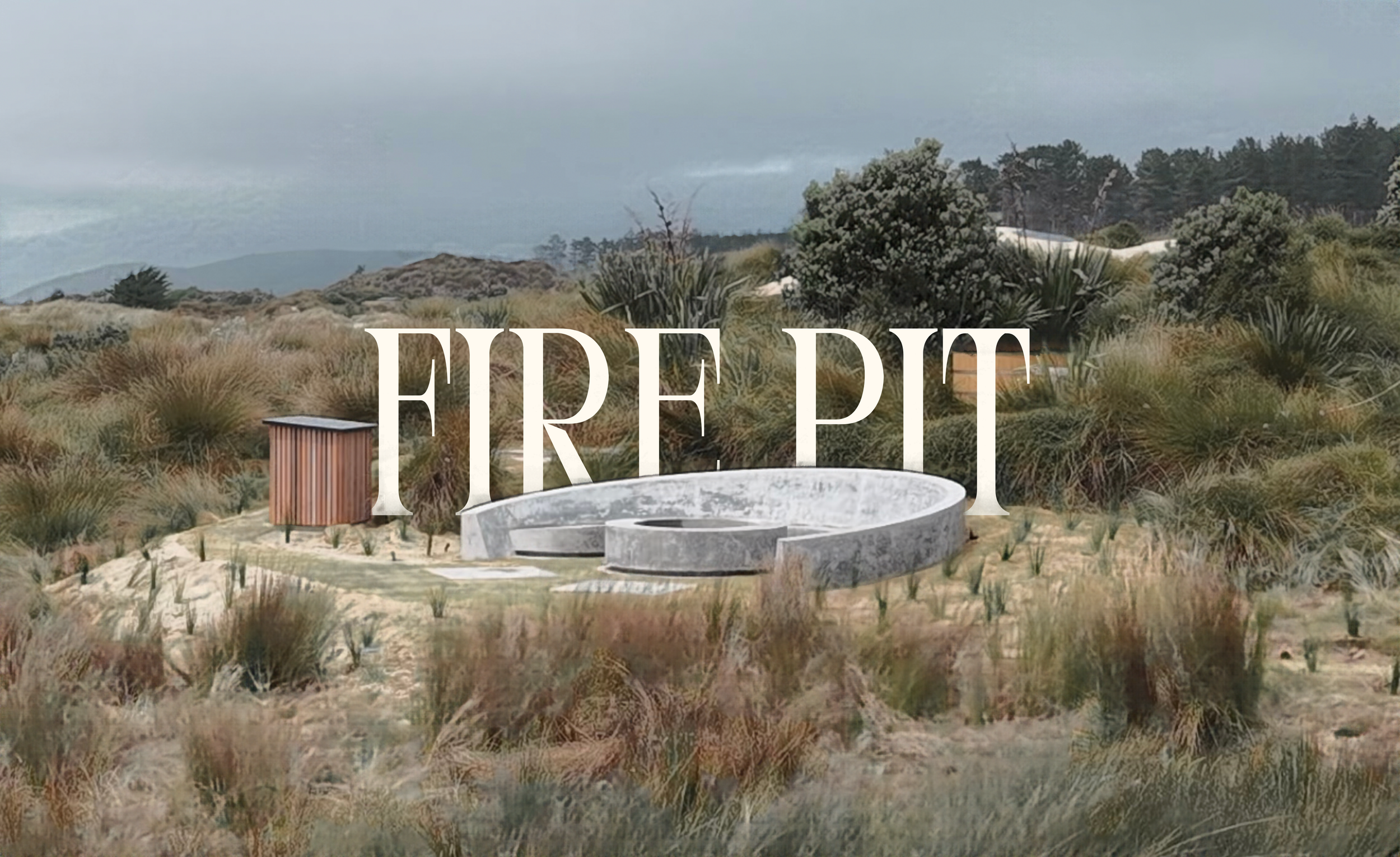
We knew this one would turn heads. We didn’t expect concrete hysteria.
When we shared the build on Instagram, the posts took off. Concrete enthusiasts were intrigued, a few were sceptical, and the comments filled up with the same question asked a dozen different ways: how did you actually pull that off?
So we’ve answered them. Each question below comes straight from those comments.
We’re honoured to work at this scale. Projects like this push the team, sharpen our craft and build momentum for the next ambitious brief.
Landscape design by Robin Shafer Landscapes, in collaboration with concrete legend Mitch Fleming of Te Arai Construction.
1. “Why are you building the formwork twice?”
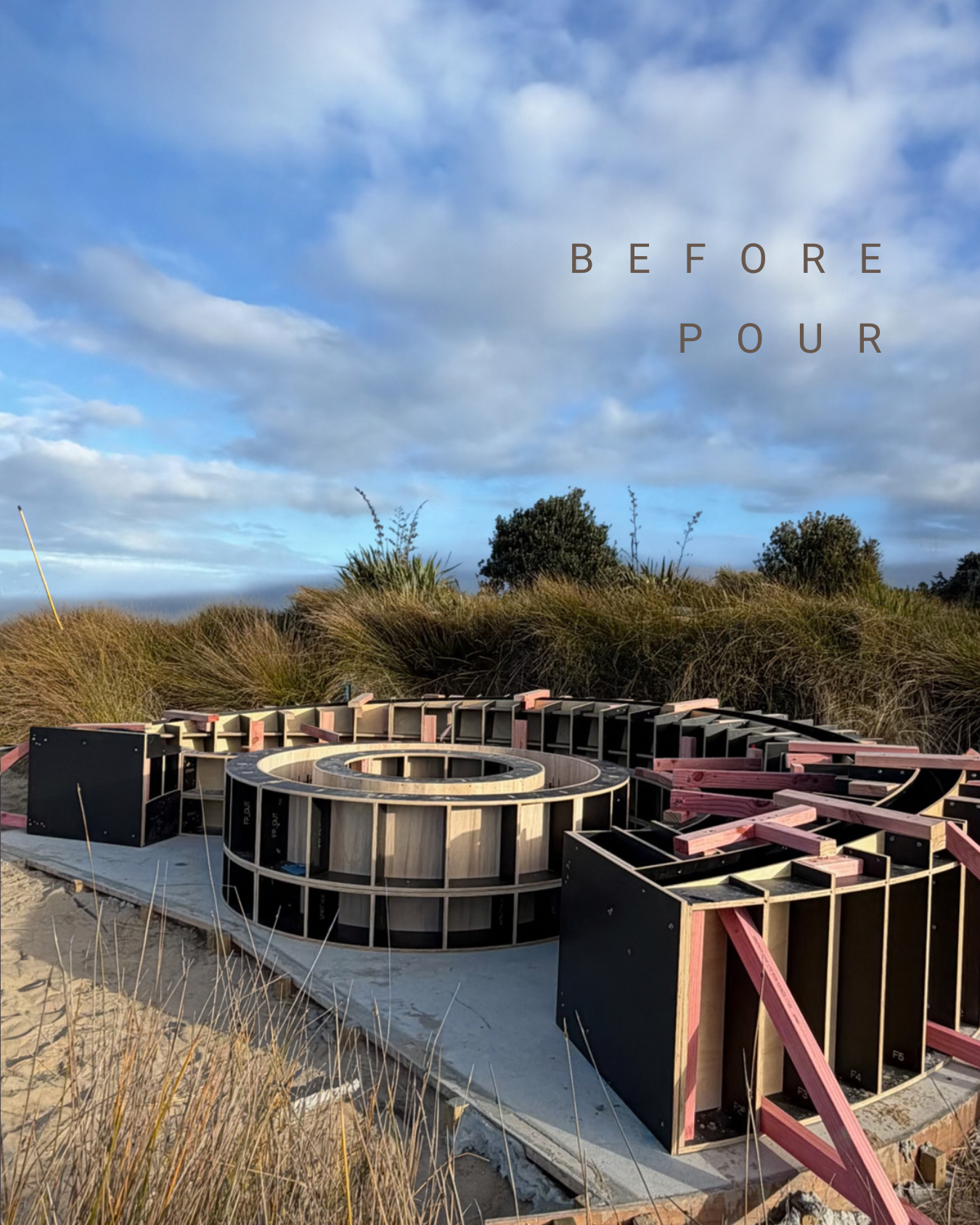
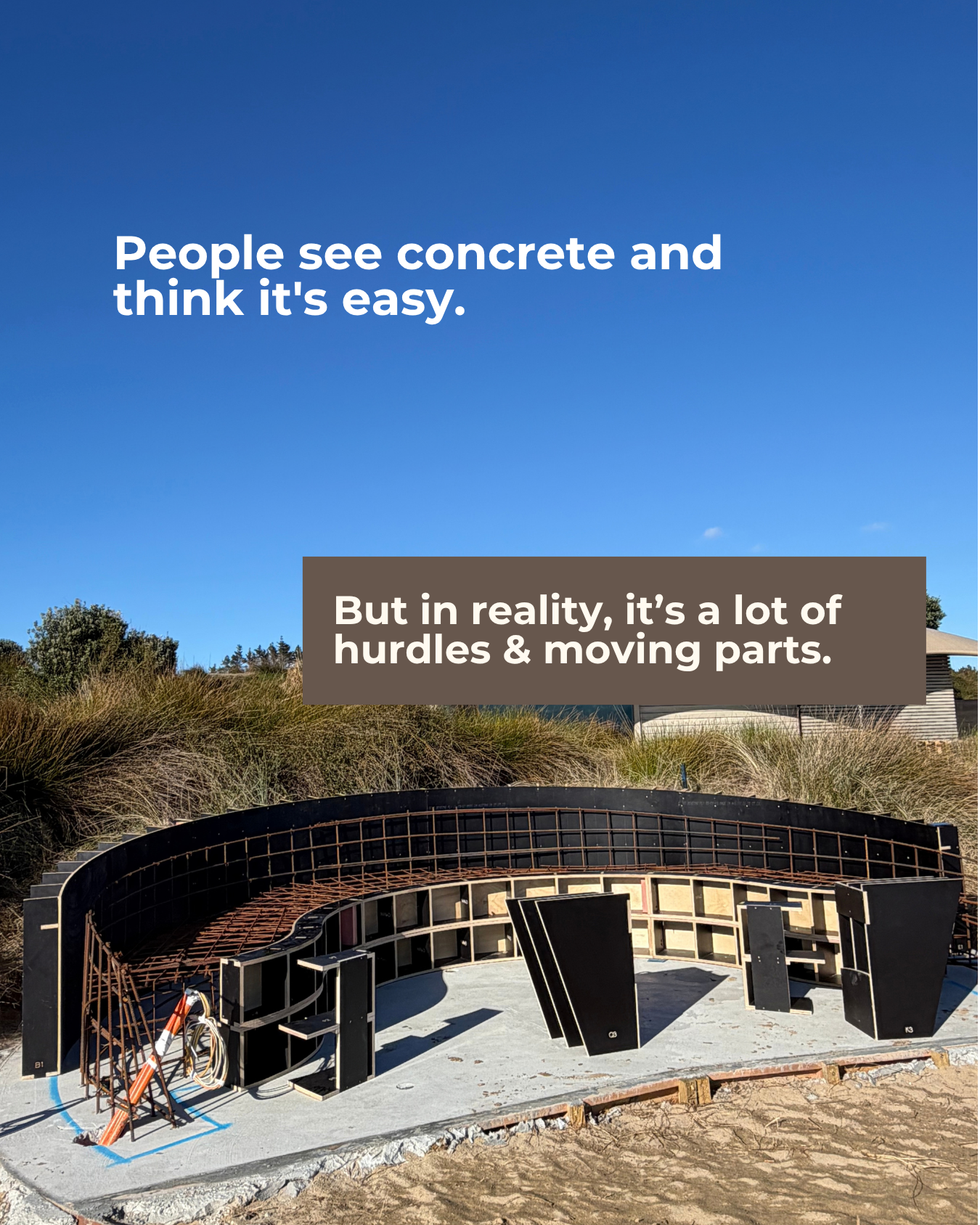
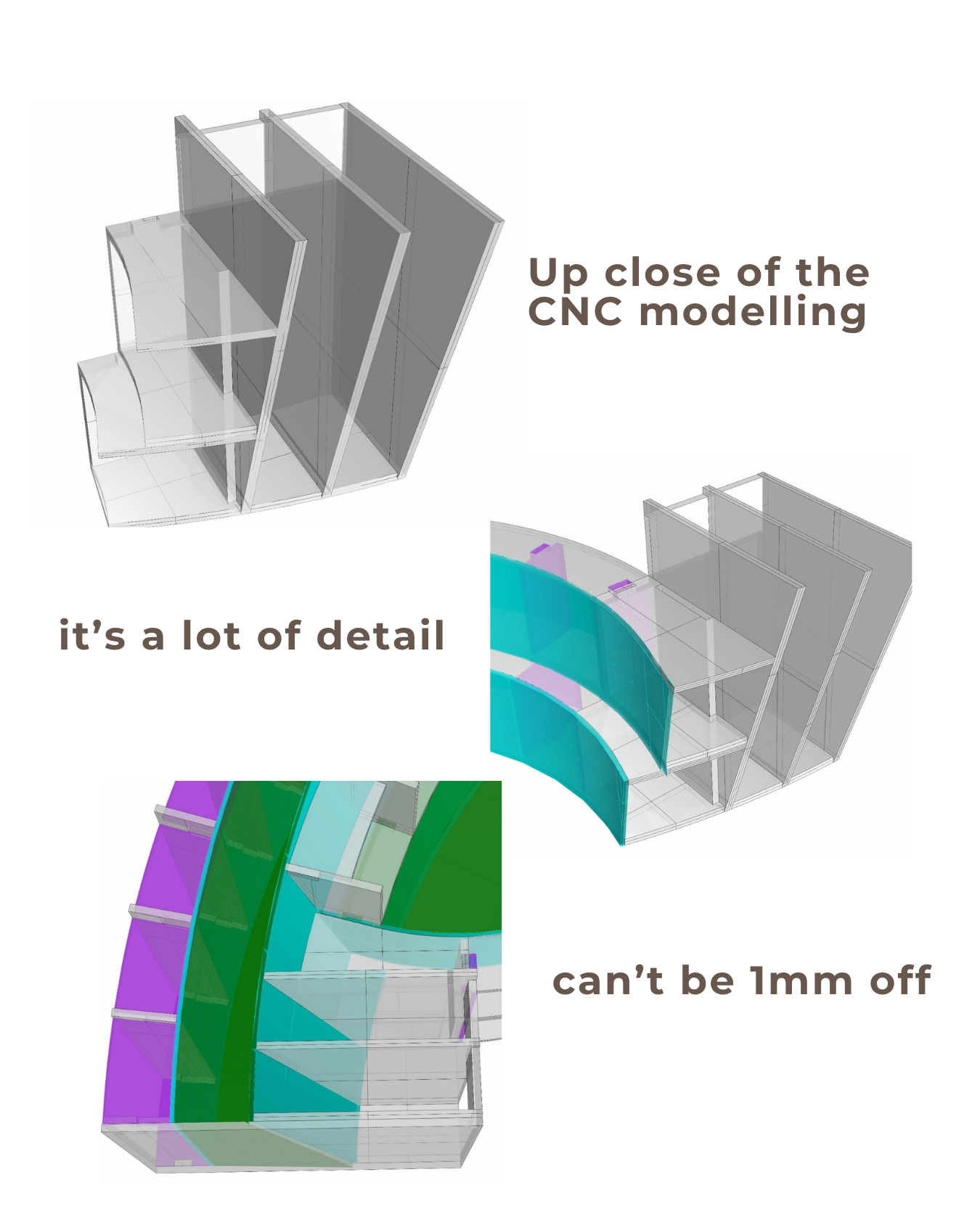
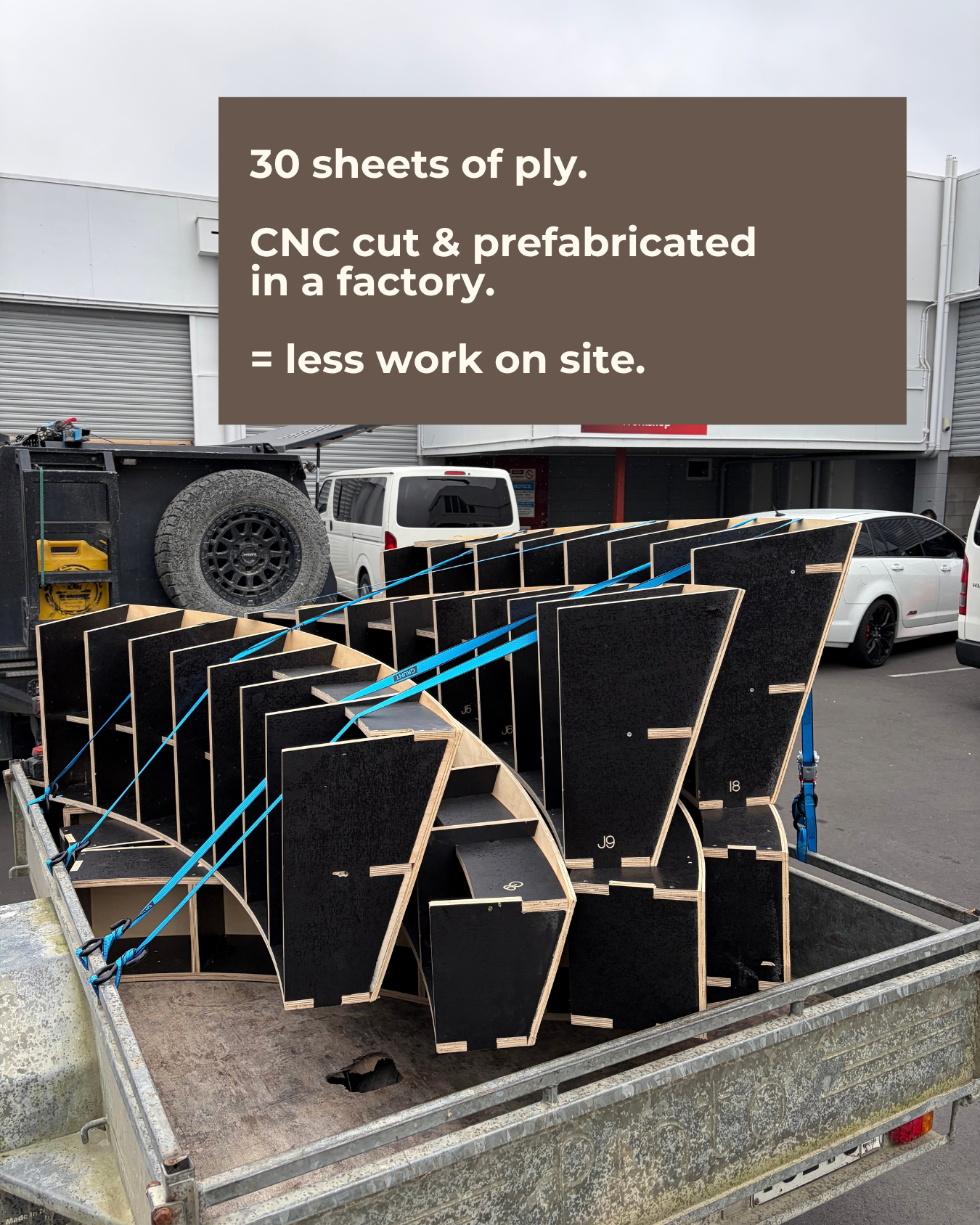
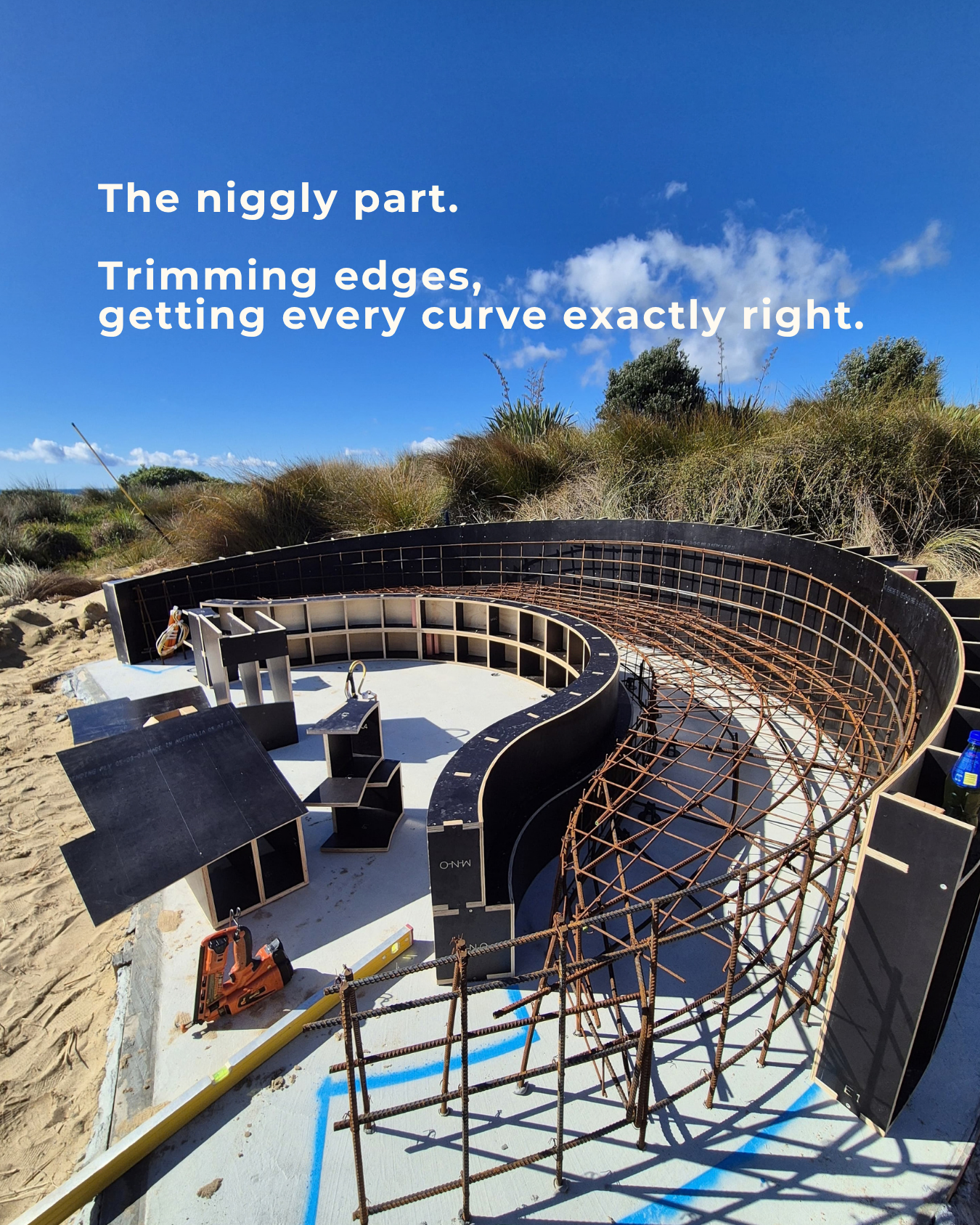
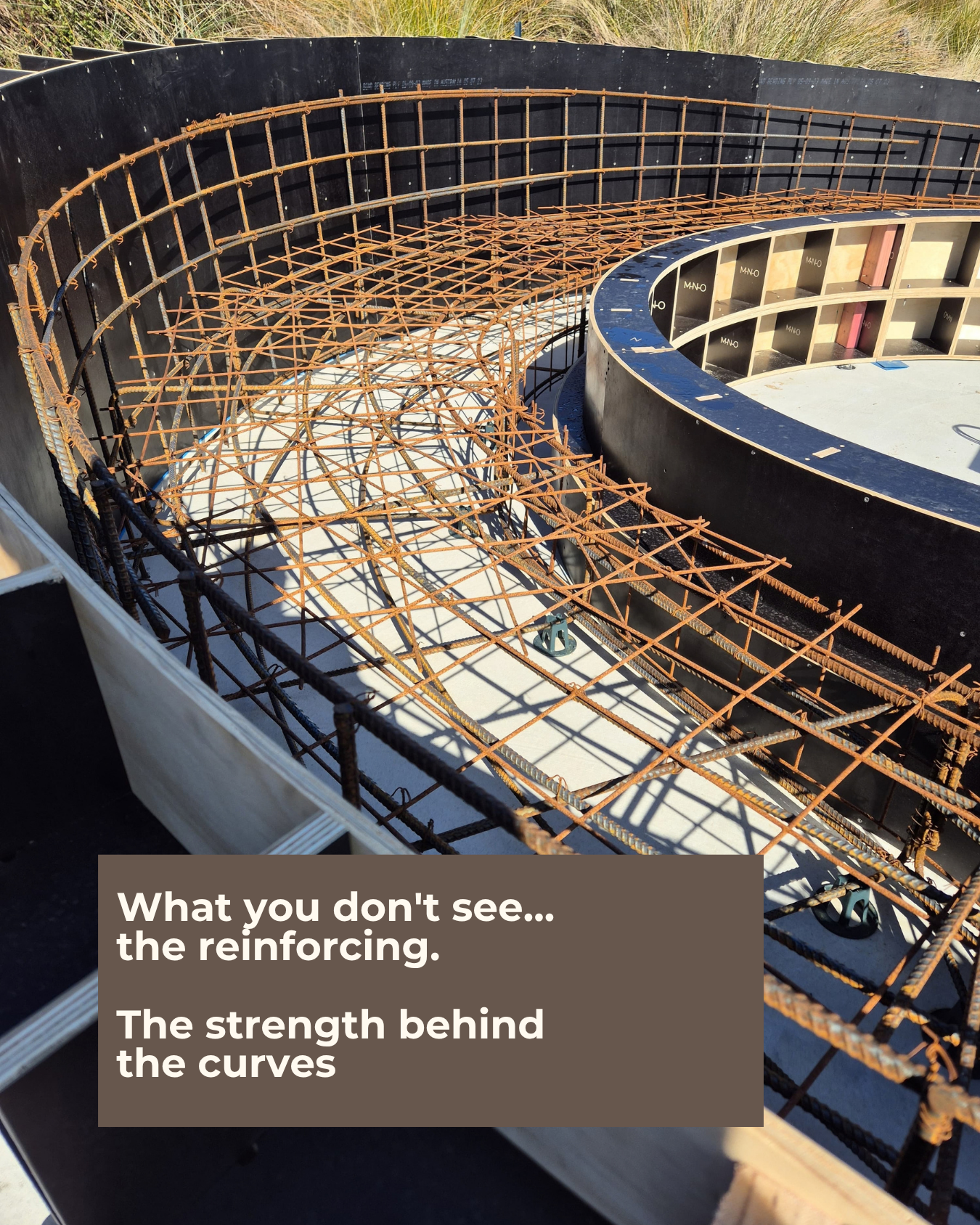
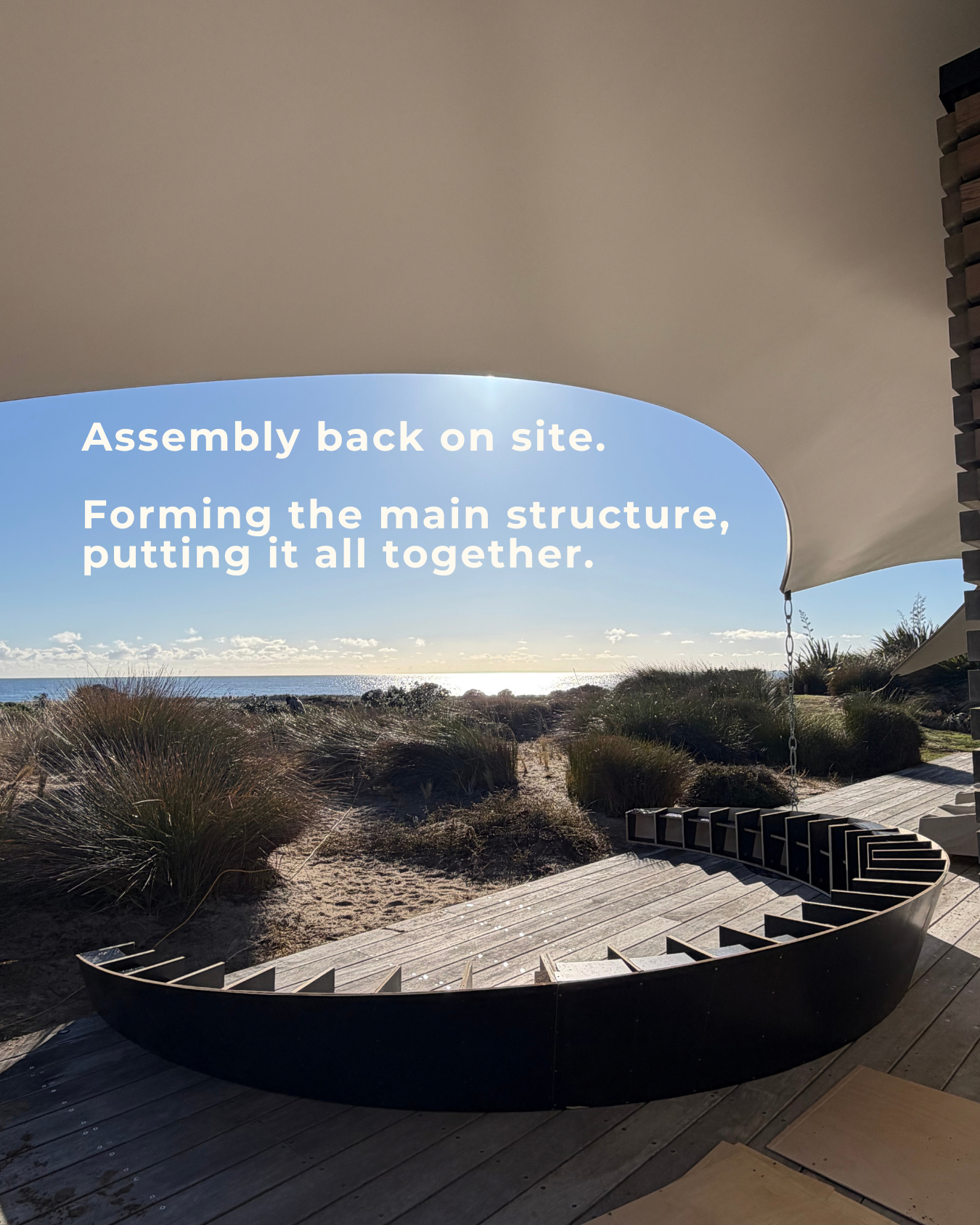
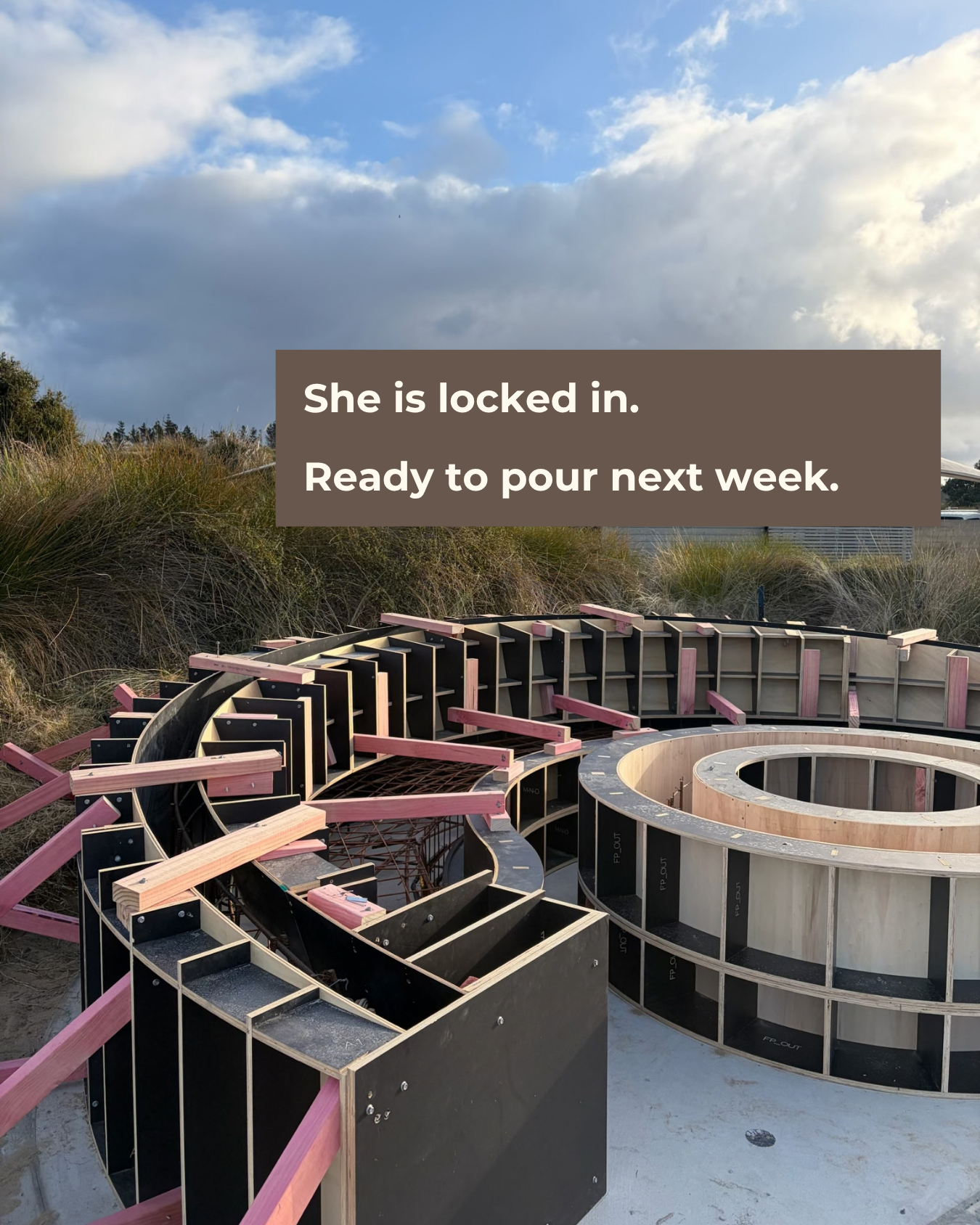
People see concrete and think it is easy. The reality is that a curved, freestanding seat needs two sets of formwork: an outer mould and an inner mould, both cut to precise curves, with the concrete poured into the gap between them.
The curved profiles were CNC cut, by CNC Studio, then pre-fab with the help of Artisan Timber Joinery.
Every rib and panel had to line up so the curves flowed without kinks once the moulds came off.
It is a lot of moving parts, and fiddly, niggly work getting everything to line up.
2. “Does it not sag in the middle without any soldiers?”
Wet concrete is heavy, and a curved seat with a hollow underneath wants to slump, bow or blow out the formwork.
The answer is bracing, and just lots of it, plus checking, triple checking, and a little luck. Internal and external bracing holds both moulds rigid against the pressure of the pour, so the shape you design is the shape you get.
3. “Damn, that’s a fast strip!”
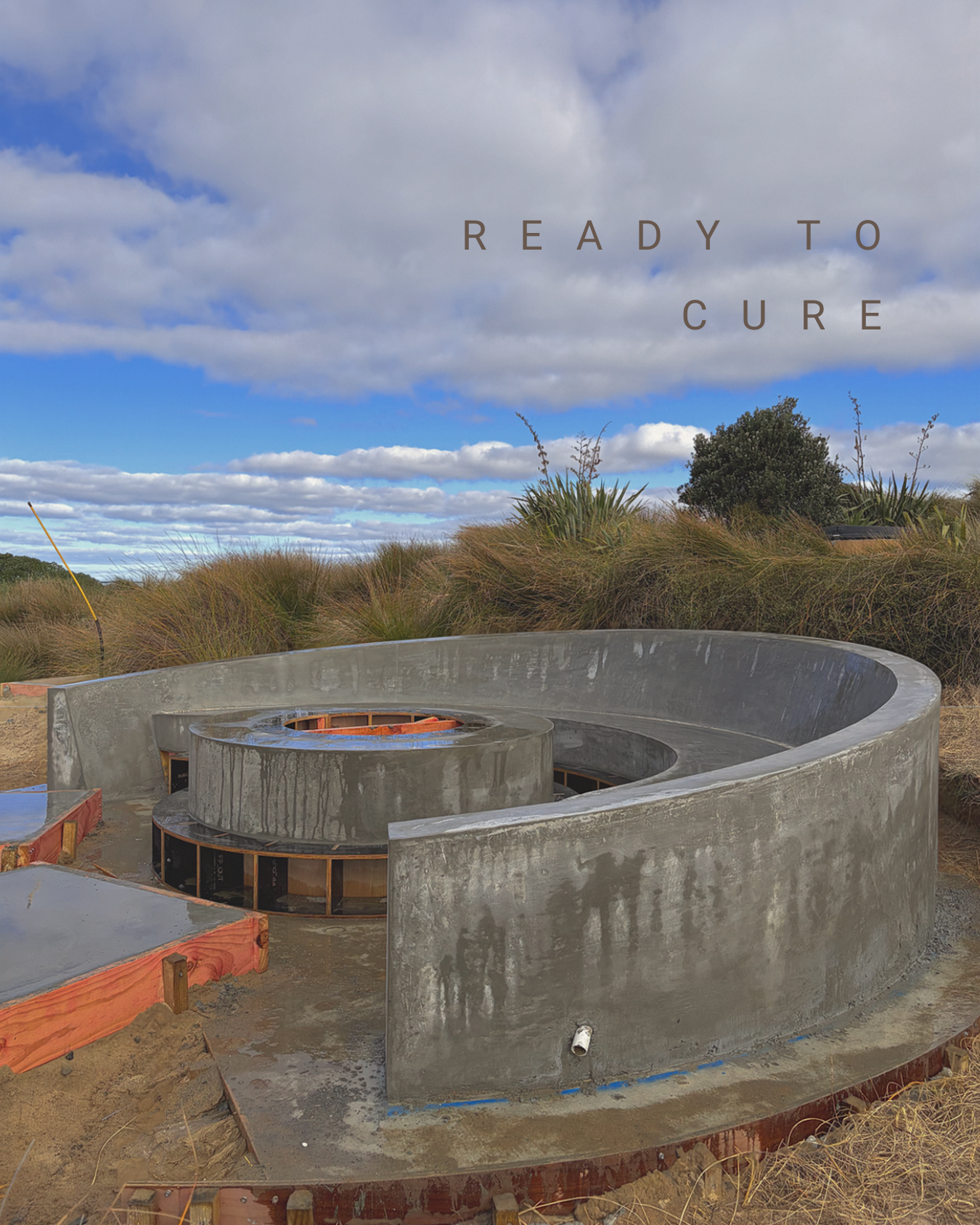
We did not muck around. Concrete truck arrived at 7 and started pumping at 7:30am, by 11am we were getting into the stripping. That was always the plan, because we needed to strip while the surface was still workable.
Stripping early meant the whole surface could be hand-trowelled, not just the seat top. That all-over trowel finish is what gives the piece its smooth, consistent skin from every angle. From here it cures, gets buffed back, and becomes the centrepiece of the wider landscape.
Quick questions
How much does a custom concrete fire pit and seat cost?
Every project is different: size, curves, access and finish all change the number. Bespoke formwork is a big part of the budget on curved work, which is why we price each one individually. Get in touch and we can talk through yours.
How much concrete went into it?
A lot. Roughly 10 cubic metres was pumped. Taken in by 2 Firth trucks.
Can you build something like this in Matakana, Omaha or Mangawhai?
Yes. We design and build landscapes across Tara Iti, Te Arai, Mangawhai, Omaha and Matakana, and work alongside landscape architects and specialists on projects like this one.
What’s next at Tara Iti?
The stressful, sleepless part is behind us. Next comes the wider landscape: lighting, edging, lawn and planting, all designed to frame the seat and fire pit within the dunes.
A project like this only happens with the right people. Our thanks to:
Robin Shafer Landscapes for the landscape design
Mitch at Te Arai Construction for leading the concrete work and pulling his top team together
CretePro Concrete Pumping, Topscape, Firth and Artizen Construction
Planning a fire pit for your outdoor space?
Talk to our team about design-build landscaping in Tara Iti, Mangawhai, Omaha and Matakana.
